The FDA Shift Toward New Approach Methodologies (NAMs)
Significant progress has been made toward reducing reliance on animal testing in biomedical research since the FDA Modernization Act 2.0 was enacted in 2022. Although animal models have contributed substantially to our understanding of fundamental biology, researchers increasingly recognize species-specific differences between animals and humans that have important pharmacogenomic implications1. These disparities confound translational outcomes and contribute to the high failure rate of therapeutics advancing into late-stage clinical trials. In fact, more than 90% of drugs that appear safe and effective in animal studies do not ultimately receive FDA approval in humans, predominantly due to safety and/or efficacy issues2,3.
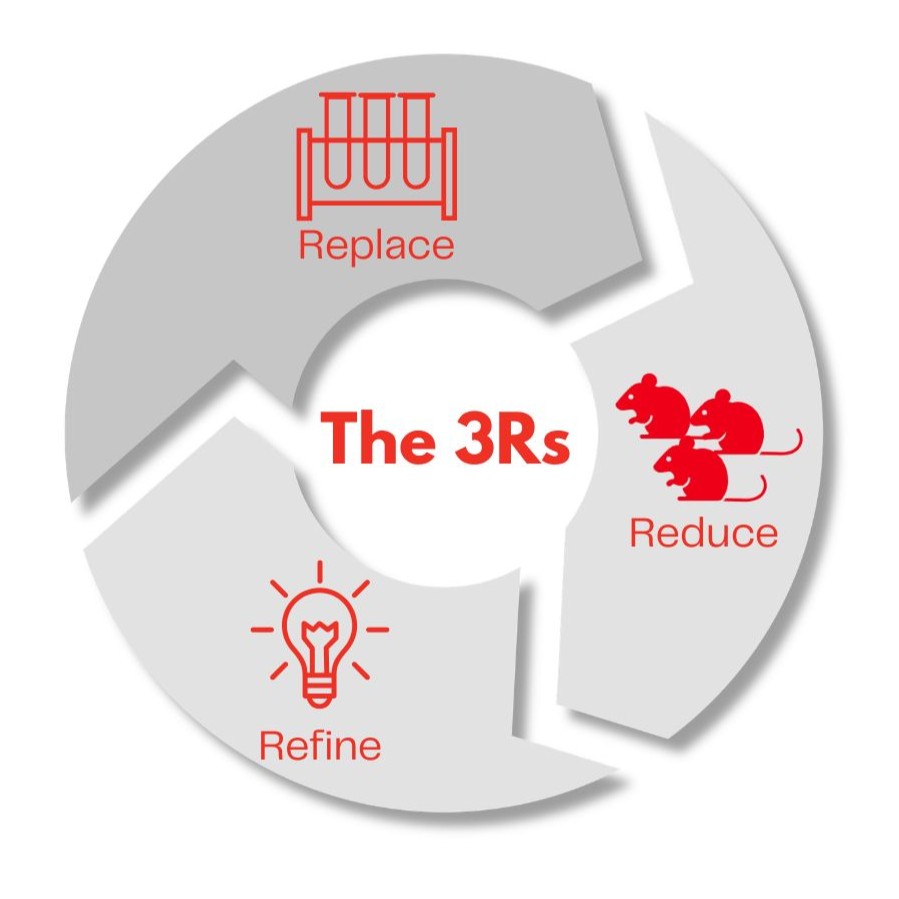
In support of these efforts, the FDA released the Roadmap to Reducing Animal Testing in Preclinical Safety Studies in 2025, which promotes the implementation of New Approach Methodologies (NAMs) to replace, reduce, and refine animal use in research (the 3Rs).
NAMs are innovative, non-animal technologies and strategies designed to improve the human relevance of preclinical drug evaluation. Key NAM categories highlighted in the FDA roadmap include (i) in vitro human-derived systems such as organoids and organs-on-chips, (ii) in silico approaches including AI-enabled predictive models, and (iii) other innovative platforms such as ex vivo human tissues2.
In addition to supporting the 3Rs, NAMs offer several advantages over traditional animal testing, including the potential to accelerate drug development timelines and reduce costs. Improved predictive relevance of these technologies can help identify safety liabilities earlier in the development pipeline, enabling researchers to “fail faster” and avoid costly late-stage clinical failures.
PSC-Derived Organoids as Human-Relevant NAMs
A key subset of NAMs are in vitro human tissue models, which include organoids derived from human pluripotent stem cells (hPSCs), including induced pluripotent stem cells (hiPSCs) and embryonic stem cells (hESCs). These systems are three-dimensional, self-organizing tissue models that recapitulate key structural and functional features of human organs. They overcome traditional 2D monolayer cell culture limitations by mimicking complex human organ architecture, offering a physiologically relevant human alternative to animal models.
Compared to adult stem cell (ASC)-derived organoids, hPSC-derived organoids circumvent many of the limitations associated with primary human tissue availability and donor variability. Because hPSCs can be expanded indefinitely and directed toward a broad range of organ-specific lineages, they have the potential to be used for modeling many different tissue types and developmental stages4–6.
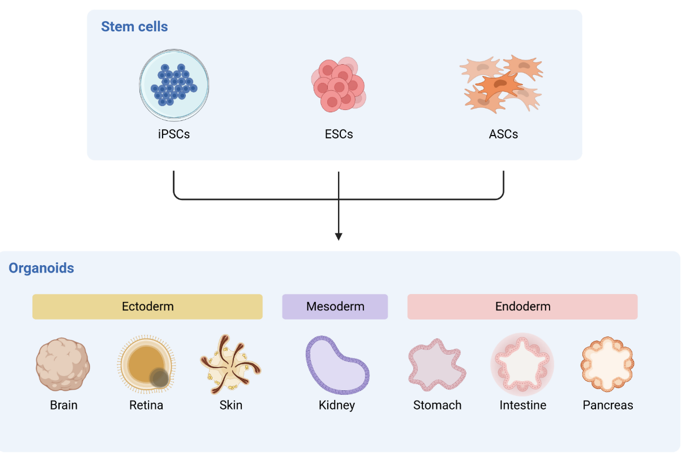
hPSC-derived organoids have also enabled the development of models that are difficult or impractical to generate from primary tissues from which ASC organoids are derived. For example, in vitro models of brain development have also been possible with the advent of hPSC-derived organoids technology. Brain organoids generated from hPSCs containing specialized regions and cell populations including cortical structures and radial glial cells, have provided new opportunities to study human neural development and neurological disorders such as microcephaly5.
In the context of rare disease research, CRISPR-based gene editing combined with hPSC-derived organoids offers additional opportunities for mechanistic and translational studies. Patient-derived hPSCs can be genetically edited using CRISPR-Cas9 technology to correct disease-causing mutations and generate isogenic control lines or organoids. These paired systems allow researchers to more precisely investigate genotype-phenotype relationships across organoid models representing the tissues involved in disease pathophysiology6.
Organ-on-a-Chip and Microphysiological Systems (MPS)
Microphysiological systems (MPS), also referred to as “organ-on-a-chip” platforms, represent an emerging advancement of organoid technologies. These systems integrate multicellular organoids generated from primary cells or hPSCs with engineered microfluidic platforms to more accurately model human tissue physiology. By incorporating dynamic biological and mechanical cues, including shear stress, nutrient gradients, and fluid flow, MPS platforms can better recapitulate organ-level function and inter-organ communication than static culture systems alone6-7.
Over the past decade, MPS technologies have rapidly advanced in both sophistication and breadth, with models now developed for more than 60 organ and tissue systems spanning all 11 major human organ systems, including brain, heart, liver, kidney, lung, and gut7.
Recent scientific meetings, including the Organoids in Action Symposium and the Advanced Materials Industrial Consortium (AMIC) Annual Meeting, both held in Madison, WI, have highlighted the growing use of hPSC-derived organoids and MPS as translationally relevant platforms for modeling human biology and evaluating therapeutic responses. Topics presented at these meetings included advances in bioengineering to improve organ-on-a-chip systems, the application of organoids in disease modeling and personalized medicine, and multi-omics approaches to enhance organoid characterization. These themes reflect the broader shift toward advanced human-relevant in vitro models for preclinical research and drug development.
High Quality PSC Lines for NAM-Based Research
The WiCell Stem Cell Bank has an extensive collection of hESC and hiPSC lines that can be used to develop organoid and MPS models. In addition to healthy iPSC lines, the repository includes numerous disease-specific iPSC lines with their corresponding isogenic controls representing a variety of conditions, including Parkinson’s disease, Alzheimer’s disease, and amyotrophic lateral sclerosis (ALS).
View the full catalog of available iPSC lines here: https://www.wicell.org/order-stem-cells/
References
- Zushin PH, Mukherjee S, Wu JC. FDA Modernization Act 2.0: transitioning beyond animal models with human cells, organoids, and AI/ML-based approaches. J Clin Invest. 2023;133(21):e175824. Published 2023 Nov 1. doi:10.1172/JCI175824
- Mirlohi MS, Yousefi T, Aref AR, Seyfoori A. Integrating New Approach Methodologies (NAMs) into Preclinical Regulatory Evaluation of Oncology Drugs. Biomimetics (Basel). 2025;10(12):796. Published 2025 Nov 24. doi:10.3390/biomimetics10120796
- Marshall LJ, Bailey J, Cassotta M, Herrmann K, Pistollato F. Poor Translatability of Biomedical Research Using Animals – A Narrative Review. Altern Lab Anim. 2023;51(2):102-135. doi:10.1177/02611929231157756
- Park G, Rim YA, Sohn Y, Nam Y, Ju JH. Replacing Animal Testing with Stem Cell-Organoids : Advantages and Limitations. Stem Cell Rev Rep. 2024;20(6):1375-1386. doi:10.1007/s12015-024-10723-5
- Turhan AG, Hwang JW, Chaker D, et al. iPSC-Derived Organoids as Therapeutic Models in Regenerative Medicine and Oncology. Front Med (Lausanne). 2021;8:728543. Published 2021 Oct 13. doi:10.3389/fmed.2021.728543
- Novelli G, Spitalieri P, Murdocca M, Centanini E, Sangiuolo F. Organoid factory: The recent role of the human induced pluripotent stem cells (hiPSCs) in precision medicine. Front Cell Dev Biol. 2023;10:1059579. Published 2023 Jan 9. doi:10.3389/fcell.2022.1059579
- Harriot AD, Ward CW, Kim DH. Microphysiological systems to advance human pathophysiology and translational medicine. J Appl Physiol (1985). 2024;137(5):1494-1501. doi:10.1152/japplphysiol.00087.2024